Abstract
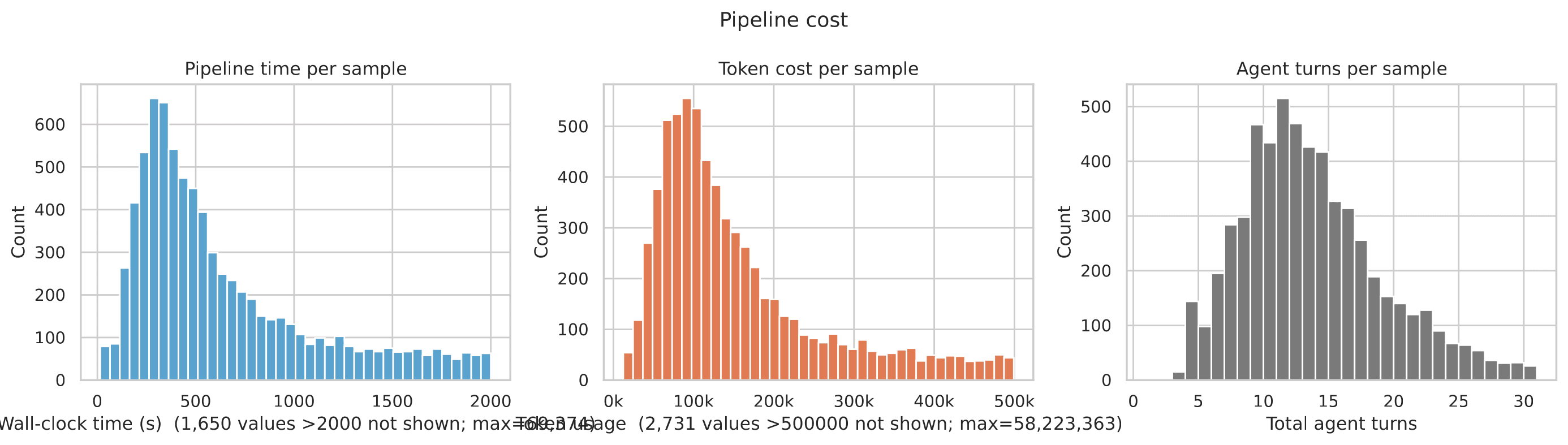
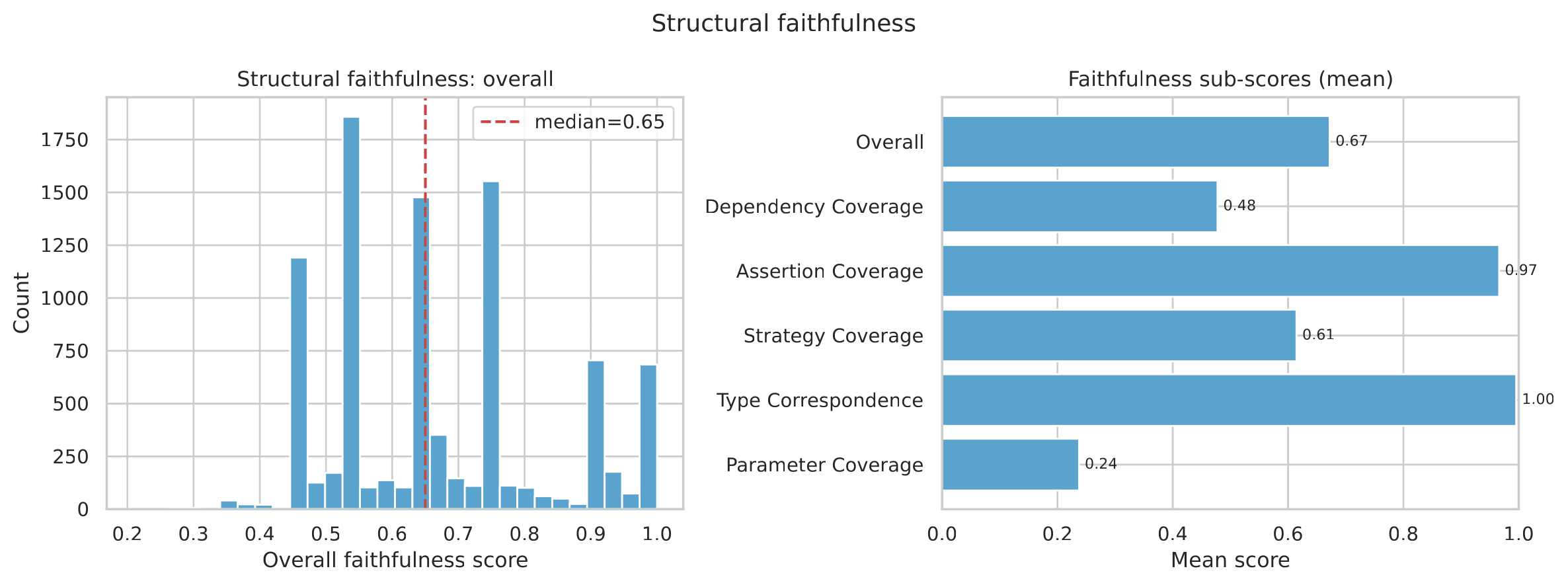
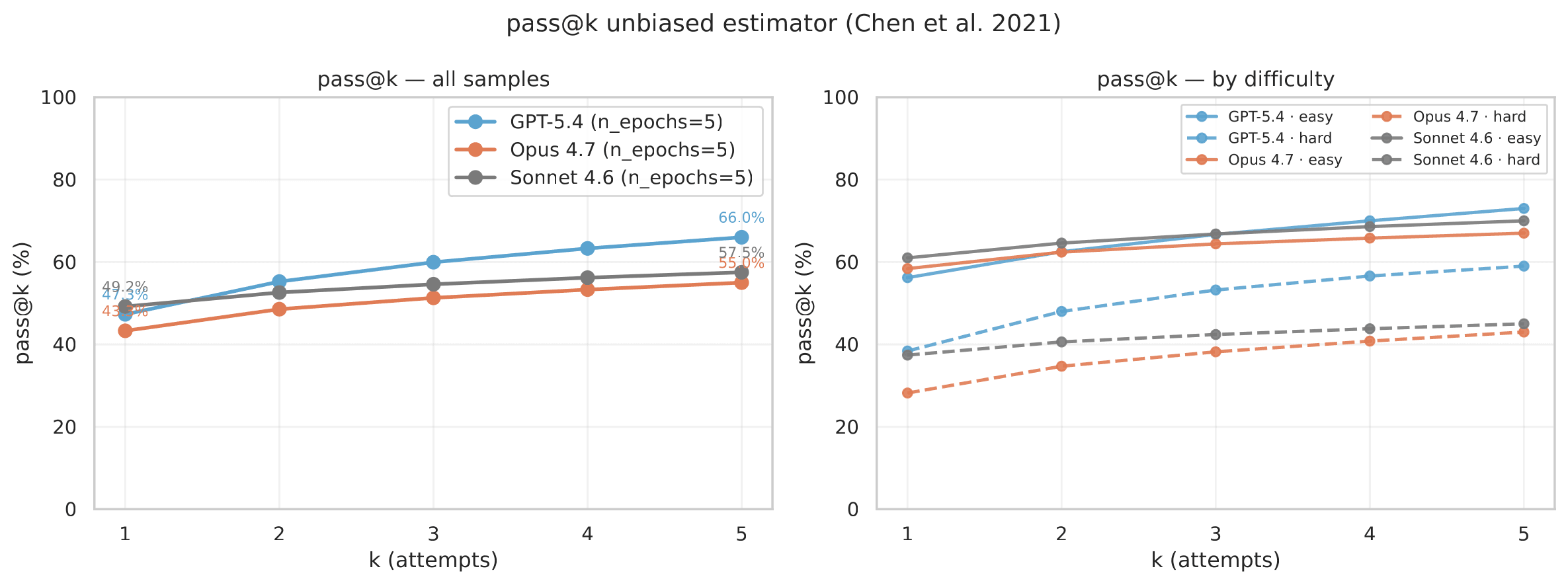
We present a benchmark for evaluating AI models and agents on real-world formal software verification tasks. We first scrape 11,039 property-based tests (PBTs) from real-world Python repositories, then automatically translate them into Lean 4 specifications with sorryplaceholders. Translating PBTs into Lean specifications is challenging: it requires modeling Python semantics in Lean, inferring the logical property encoded in an imperative PBT, and handling the inherent difficulties of dependently-typed programming in a seldom-used language. We describe a three-agent LLM pipeline for transpiling PBTs into Lean specifications, evaluate coverage and quality metrics, and provide baselines for proof generation using several automated and model-based approaches. Our benchmark aims to drive progress on the underexplored problem of AI-assisted formal verification of real-world software, which is of increasing interest as AI produces more and more of the world's code.
Figures
For the full paper — including methodology, dataset construction, baseline experiments, and threats to validity — see the arXiv version.